February at Hanze Racing Division – progress, workshops, events and new opportunities!
February was a productive month for the whole team at Hanze Racing Division. The development of our Electric Formula Student car moved forward, the team has been busy with technical progress, creative work, events, and building new partnerships. The month was full of learning, teamwork and motivation to reach more. The biggest event, which we should highlight is the Open Day at Hanze University of Applied Sciences on February 14th. During this event, we had the opportunity to represent the team and show what we do to prospective students. At our stand, visitors could try our car simulator and talk with team members about engineering, motorsport, and the Formula Student competition. It was amazing to meet so many students who were curious about how the team works and how the race car is building and designing. That day was a perfect opportunity to share our passion for engineering and motorsport with others. Another unforgettable experience this month was the workshop on “Fibreglass composite manufacturing,” organized by Professor Matthew McDonald at Hanze University. During this workshop, team members had the chance to deepen their understanding of composite materials such as carbon fiber and fiberglass and had hands on manufacturing experience. These materials are extremely important in Formula Student cars because they offer a very high strength-to-weight ratio, which is essential for bodywork and aerodynamic components. Such experiences help us improve the quality of our designs and develop new technical knowledge that can be applied directly to the car. February was also a month of new partnerships. We started a partnership with Primaned. Primaned is a project controls consultancy that optimizes large-scale projects through expert scheduling, risk management, and data-driven insights. They provided HARD with access to Oracle’s Primavera Cloud project management software and training at their Rotterdam office.The team had also a meeting with ICD Drachten, which will support the development of our car in next months. It’s important to mention that in February, our Design Team has been working hard to prepare materials that represent the team during every event. For the Open Day, they created a new banner and poster, which made our stand more visible for visitors. Moving to the technical side, the Mechanical Engineering Team has made good progress. During February, the team organized individual progress meetings with each subteam. These meetings were important for setting deadlines and making sure that each subsystem stays on schedule. A good example of the progress is the pedal box, which will be started manufacturing next week. Moving from the design stage into manufacturing means that the concepts developed over the past few months are becoming real parts! The Electrical Engineering Team also made significant progress. The team made the first pcbs and finalized the first version of the dashboard software, making an important step in the development process. Of course, progress wasn’t the only important thing. The atmosphere in the team has also been very positive. There were plenty of long evenings in the workshop, solving problems together and discussing new ideas. And a lot of coffee helped us get through the brainstorming sessions Overall, February has been a month full of progress for our team. From technical development and workshops to events and new partnerships, the team continues to move further each month. The design of several subsystems is almost finished, and we will soon start manufacturing key components. The next months will be even more exciting as the car slowly starts to come together!
SimScale sponsors HARD
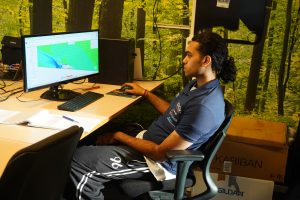
Many of our engineering projects would be impossible without the power of simulations. They allow us to predict, test, and refine our designs long before anything is physically built. That’s why we’re excited to announce that SimScale has joined the Hanze Racing Division as an official sponsor! SimScale is a leading provider of cloud-based engineering simulation software, empowering engineers, students, and teams worldwide to design, test, and optimise their projects entirely online. Through its Academic Sponsorship Program, SimScale supports student teams by providing free access to its powerful simulation platform, enabling them to perform advanced analyses, including structural, fluid, thermal, electromagnetic, and multiphysics simulations, all from their browser. This partnership allows our engineering team to push the HRD07’s performance and reliability to new levels, while gaining hands-on experience with the same tools used by professionals in the industry. A huge thank you to SimScale for supporting student innovation and helping us bring the next generation of engineers closer to the world of professional design and simulation. You can learn more about SimScale on their website at simscale.com
Rollout HRD-06
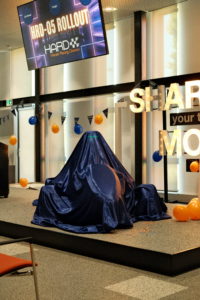
After many months of hard work the team is proud to announce the rollout of our new car: the HRD06! The rollout will take place at the Energy Barn (Zernikelaan 17) on Friday the 21th. This is an opportunity to show off the fruits of our labor to the world. The event will take place from 17:30 to 19:30. Do not forget to sign up here. We hope to see you there!
Roll Out HRD05
Previous Next After months of preparation, last Friday (June 9th) the HRD-05 was finally ready for its roll-out. In the Gerardus de San conference hall at the Zernike Campus all supporters, sponsors, family and friends were invited to have a first look at the new fully electric car made by Hanze Racing Division. After taking the cover off, the leads of our three engineering division gave the attendees some insights into the building process and the choices the technicians made to get the car where it is today and what the plans will be for the future. Missed the presentation? You can watch it back here With the roll-out done, there are only a few weeks left before we will be racing at Formula Students Netherlands. Watch us at the TT circuit in Assen from July 9th to 13th!
Kick-off Alumni Association HARD
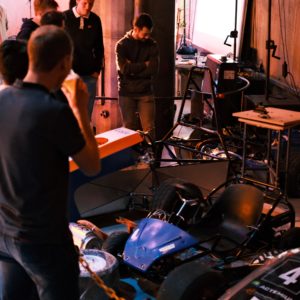
Previous Next 10 years of designing, engineering and producing race cars, means 10 years of experienced alumni that were once part of the Hanze Racing Division. This is the reason why in 2020 the Alumni Association of HARD was founded. With a slow start because of the COVID-19 pandemic, the alumni association was on hold, until now! With a kick-off event on the 17th of March 2023, the alumni association of HARD is now fully back in business. Together with old team members, the current team and sponsors memories were brought up. The evening started with an interactive game to relive old memories such as seeing the sun rise at the workshop after a full night of work! The guilty people raised their green paper, allowing the crowd to see who shared these memories and the ones that did not, their red paper. Moving on to the first design presentation of the evening, Egbert Joostens, chairman of the Alumni Association of HARD, presented the intent of the now active association and its plans for the future. The aim of the association is to establish and maintain contacts between everyone who has been involved with HARD. This all for personal recreation and to help out the current team with their own development and the producing the next generations of race cars! For the members of the alumni association, it is exciting and essential to know what the current team is up to, which is why the leads of the engineering departments gave a Design Presentation of the current car, the HRD05-2. Bas van Kranenburg started off with the mechanical engineering side of the car, something that was easier to understand for most of the crowd than the electrical engineering side that was presented by Tobias Harryvan. Since the HRD05-2 is the first electrical race car built by HARD, the designs of the first electrical systems that are going to be produced by HARD were shown and explained. Michal Tesnar, lead of the driverless engineering department, took the attendees to another new aspect of the team and explained the thoughts and initial designs of an autonomous race car, which is laying in the near future of HARD! With the HRD05-2 being electric, there is an opportunity to compete in the Formula Student competition with additional driverless software in order to drive autonomously on track! Damien Dufour, chairman of HARD, stepped away from the engineering side and gave an update on the current team status and the organisation of the communication and acquisition departments of the team. Herewith, the design presentation of the team 2022-2023 and the HRD05-2 came to an end. Laughter, drinks and memories we shared as people mingled and reminisced of their times at HARD.
The Shutdown Circuit
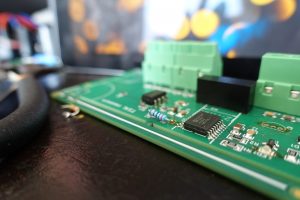
A very important part of the electrical system is the shutdown circuit. If something happens that isn’t supposed to happen, the shutdown circuit will get notified and shut down the vehicle. To make this shutdown circuit, we make use of different sensors, switches and PCB’s. To start the electrical system there is a low voltage (LV) battery. This will supply the shutdown circuit with the necessary current. The first block in the circuit is the LVMS, or Low voltage master switch. This is a physical switch on the side of the car that is turned on when starting the vehicle to allow the current to flow to the rest of the shutdown circuit and the rest of the low voltage system. The second block is the BSPD, or Brake System Plausibility Device. This device monitors faults in the braking system. If braking goes wrong, it will automatically shut down the circuit. After that, you can see the IMD, or Insulation monitoring device, and the AMS, Accumulator management system. The IMD continuously checks if the value of the insulation resistance falls below a response level. If so, the system will shut down. The AMS checks if anything is wrong with the cells of the accumulator container, and again, if anything is wrong it will shut down the system. On the car are three shutdown buttons. These are physical emergency buttons that can be pushed by people around or inside the car to shut down the circuit. There is one button inside the cockpit and one on the left and right side of the car. AS and RES, Autonomous system and Remote emergency system, are systems that come from the driverless systems of the car. If anything goes wrong in the driverless systems, these PCB’s will get that feedback and are able to shut down the entire vehicle. If the car crashes and thus decelerates at an abnormal amount the Inertia switch will get activated and it will shut off the systems. BOTS, or Brake over-travel switch, will get activated when the brake paddle breaks. There is a switch behind the brake paddle, which it isn’t able to reach when fully intact. When broken the brake paddle will exceed the regular travel distance and activate the switch. TSMS, or Tractive system master switch, is a switch that needs to be turned on when starting the car to allow the current to flow through the rest of the circuit. The AIR Coils, or the Accumulator isolation relay coils, check if there is current flowing in its coils. If so, it will activate the high voltage systems and if not, the systems get deactivated. The Activation logic is related to the start button inside of the cockpit. If this all works, we are able to safely drive our car at Formula Student in the upcoming year!